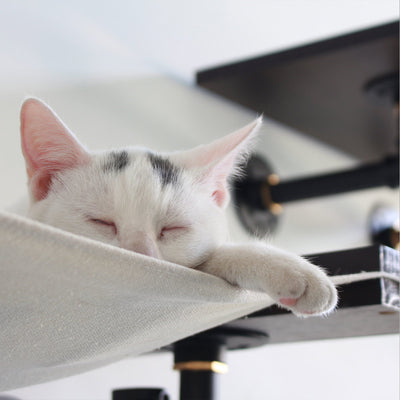
A large cat wall is not about adding more shelves. It’s about creating a structured space where multiple cats can move, rest, and coexist without conflict.
Start Building Your Cat WallMulti Entry System
Multiple access points reduce waiting, blocking, and hesitation.
Path Network
Not a single route, but a connected network that allows free movement.
Layered Territory
Different heights create natural zones and reduce competition.
Build Multiple Entry Points
One entry works for one cat. Multiple cats require multiple access points to avoid blocking.
Recommended: 2–3 entry points across the wall
Create a Path Network
A single vertical line creates conflict. A connected structure allows cats to pass, loop, and choose paths.
Spacing: 20–30cm vertical, ≤40cm horizontal
Add Multiple Rest Zones
Most conflicts happen at high points. Multiple resting areas reduce territorial tension.
Recommended: 3+ rest spots at different heights
What Fails vs What Works
❌ Common Mistakes
- Single path design
- One entry point
- Only one resting area
- No horizontal connections
Result: Cats compete, avoid, or stop using the wall
✅ Effective Structure
- Multiple entry points
- Branching or loop paths
- Distributed resting zones
- Connected horizontal flow
Result: Smooth movement and long-term usage
How Cats Actually Use a Large Cat Wall
Entry → Climb → Branch → Cross → Rest → Exit
A working cat wall behaves like a movement system, not a static structure.
Recommended Starter Structure
Build a System, Not Just a Wall
Start with a structured layout. Expand based on how your cats actually move.
Shop Cat Wall Units